
Non-Gene-Modified DC Vaccine for EBV-Related Blood Cancers
Published by Lexaid, the brand of Shanghai Qile Wuyou Technology Co., Ltd. (其乐无忧). Company & brand
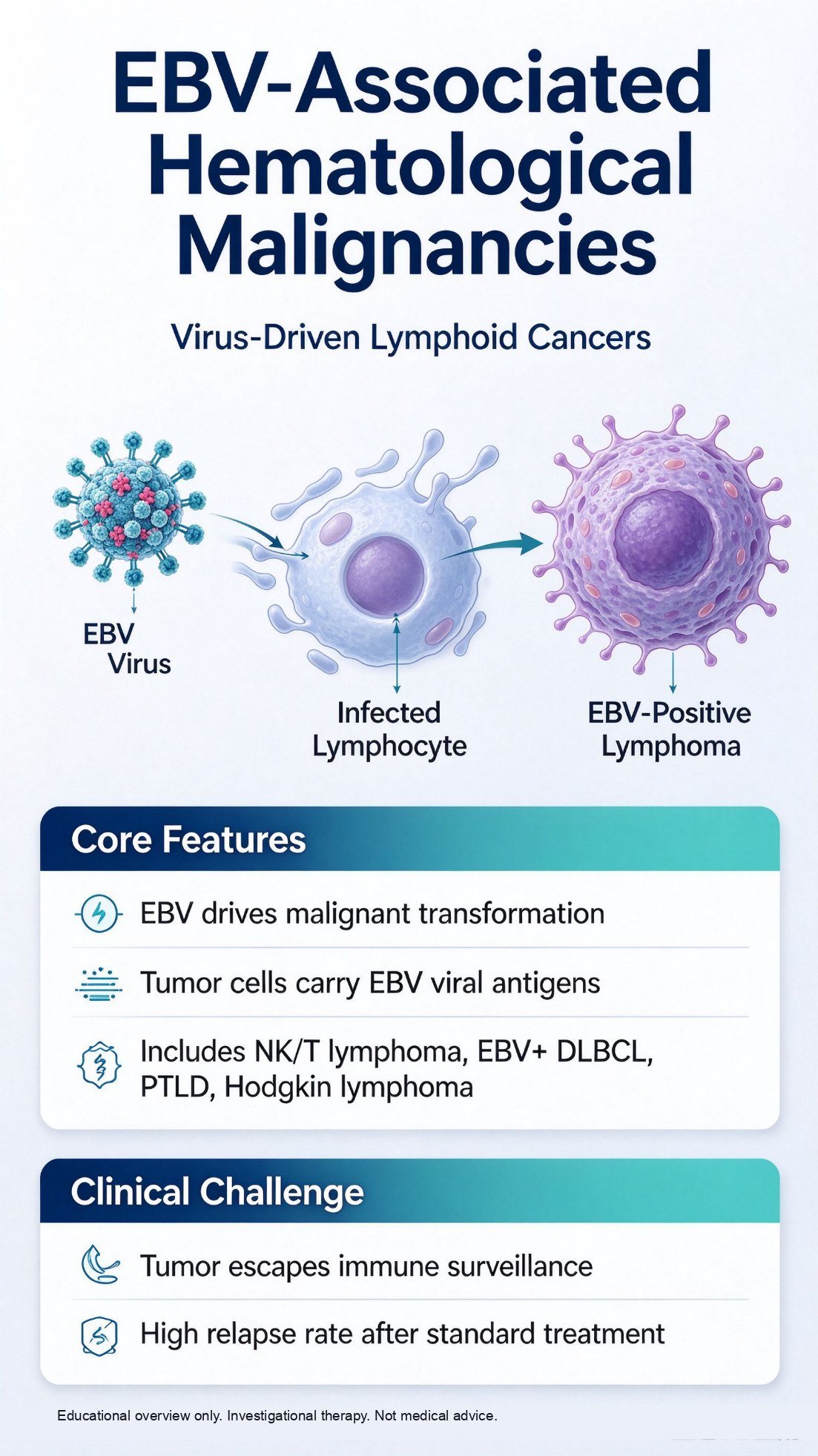
This briefing is about a non-gene-modified autologous dendritic-cell (DC) vaccine for EBV-related blood cancers. The patient’s own monocytes are matured into DCs in a GMP lab, loaded with EBV antigens, and given back so they can present those antigens to T cells. No exogenous gene is inserted into the DC. It is not a cure, it does not replace chemotherapy, targeted therapy, immunotherapy, or transplant, and it does not guarantee a remission.
What EBV-related blood cancers are
Epstein-Barr virus (EBV) is a herpesvirus. Most people have been infected without knowing it. When immune surveillance drops, EBV can persist in lymphocytes and is involved in several blood cancers, including EBV-positive diffuse large B-cell lymphoma, extranodal NK/T-cell lymphoma, Hodgkin lymphoma, and post-transplant lymphoproliferative disorder (PTLD). The tumor cells often keep displaying EBV antigens, but the patient’s own immune system may not clear them, so relapse and refractory disease are common. EBV-negative lymphomas are not this target.
What the non-gene-modified vaccine does
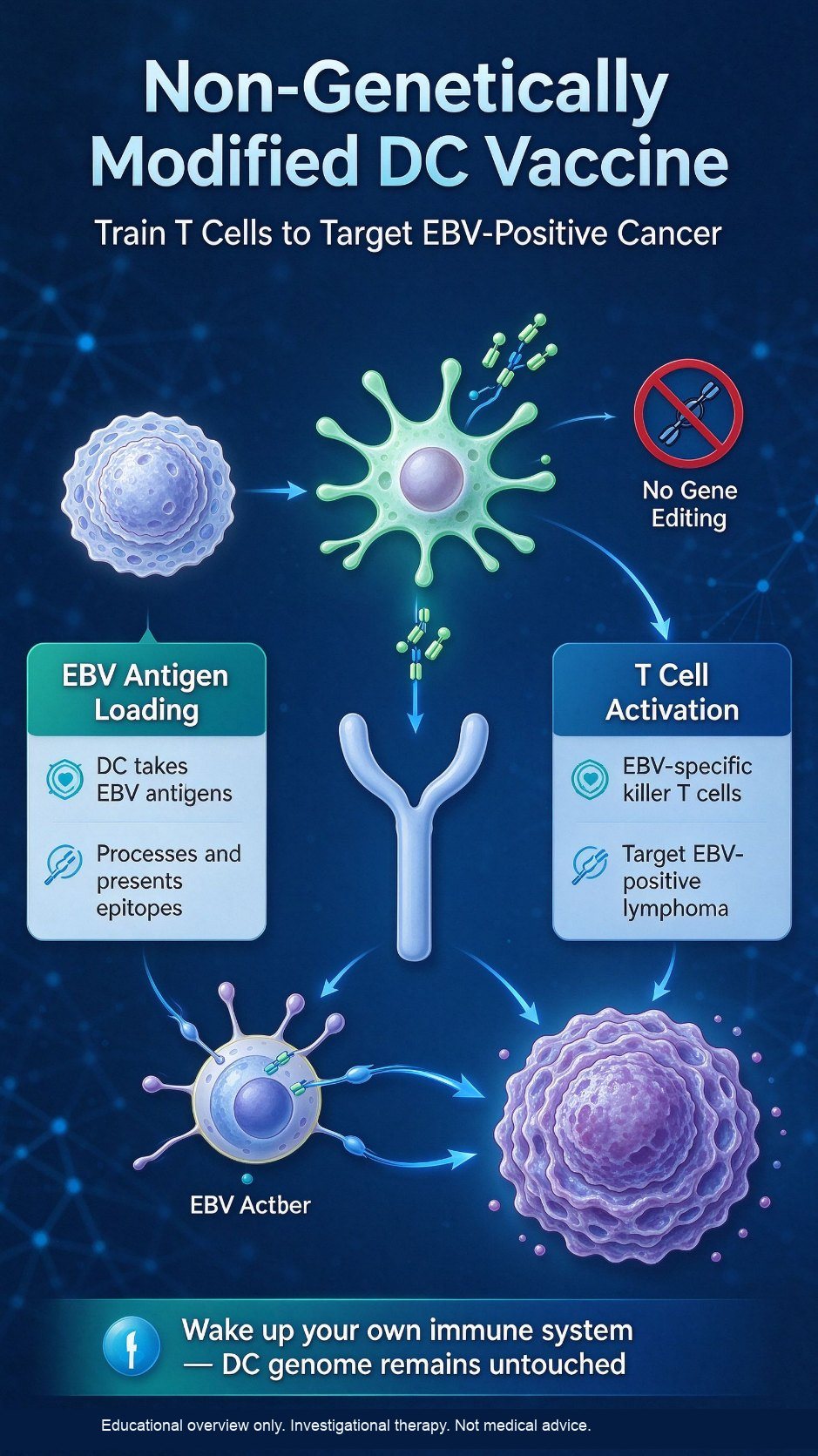
DCs present antigen. After they take up EBV latent peptides or an antigen extract, they process it into peptides T cells can see. Once reinfused they traffic to lymph nodes, activate naïve T cells, and expand T cells that can kill EBV-positive tumor cells, with the aim of leaving immune memory. That is different from infusing EBV-specific T cells that were already expanded outside the body. It is also different from a PD-1 inhibitor, which releases a brake and does little if there are not enough EBV-specific T cells to begin with. These approaches are sometimes combined. They are not the same product.
How treatment is organized
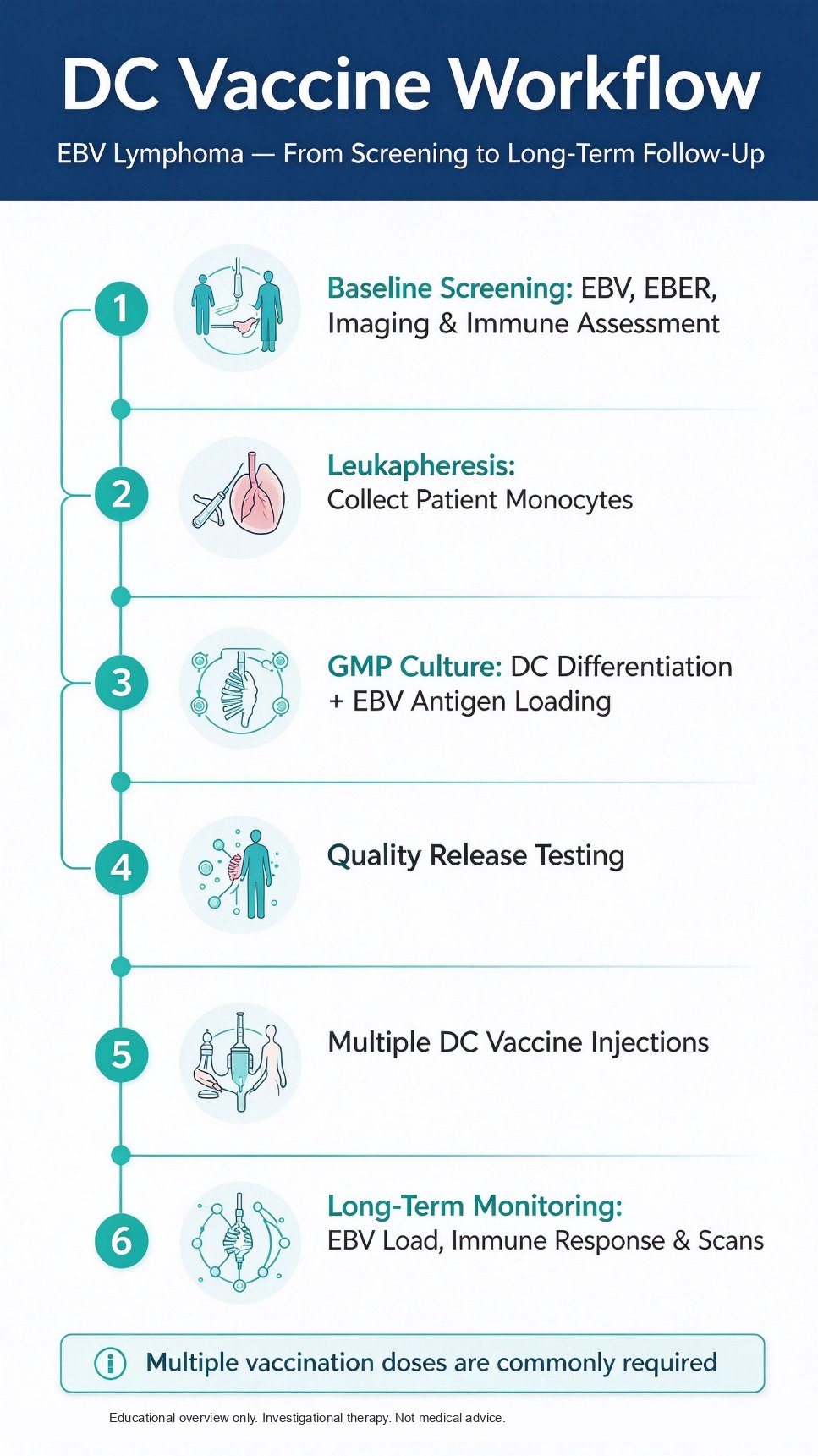
- Pathology must show an EBV-positive blood cancer, including EBER or an equivalent test, plus staging scans, blood counts, liver and kidney tests, viral load, and treatment history;
- Leukapheresis to collect monocytes;
- GMP differentiation into DCs, EBV-antigen loading, and maturation. This step does not gene-modify the cells;
- Release tests: viability, mature phenotype, sterility, mycoplasma, endotoxin. If qualified DCs cannot be grown, vaccination cannot proceed as planned;
- Repeated doses, often subcutaneous or near a lymph node, not a single infusion;
- Some protocols add chemotherapy or a PD-1 inhibitor. Hematology decides that;
- Follow EBV viral load, lymphocyte subsets, imaging, and side effects.
Who may be reviewed
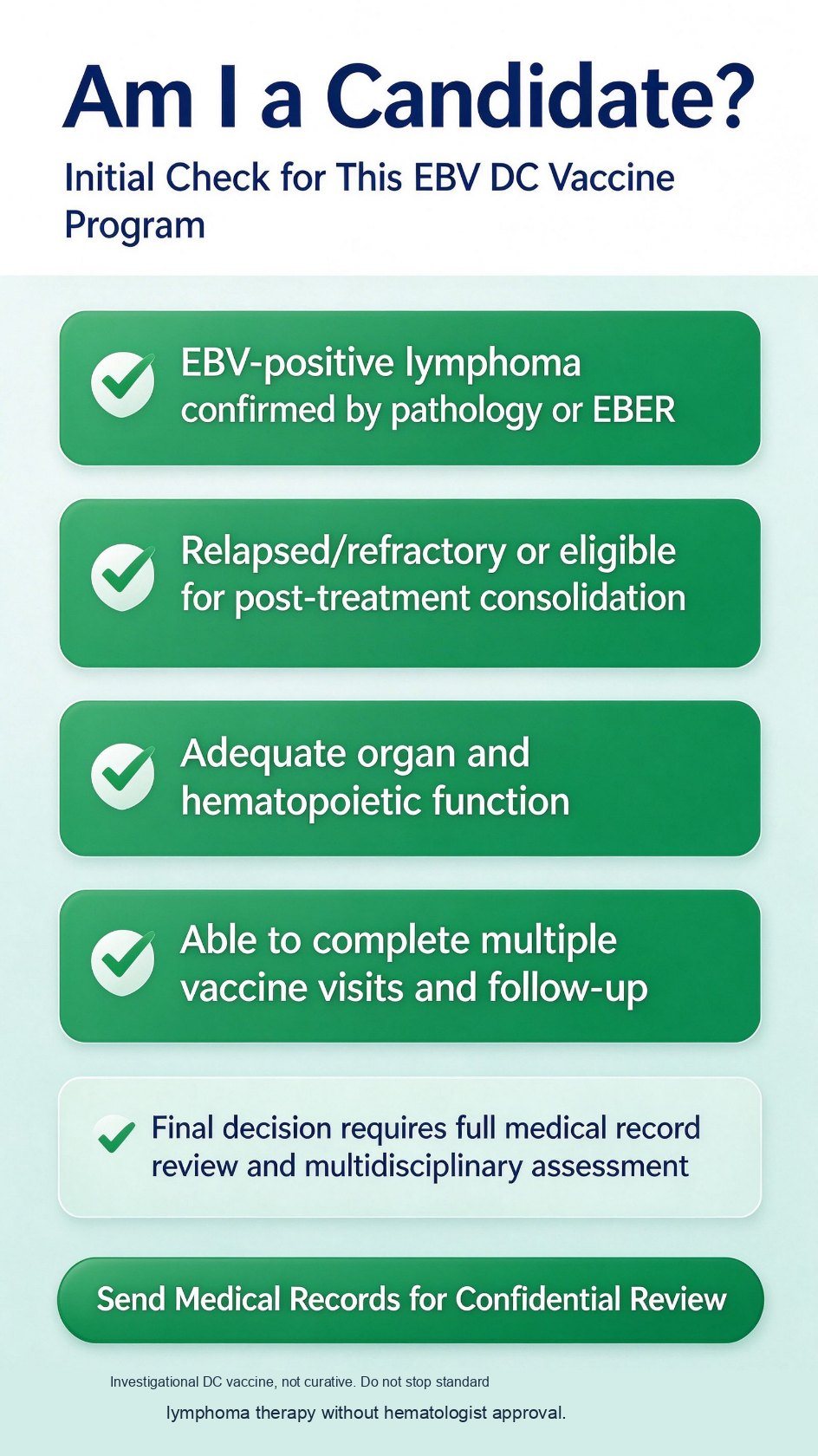
- Confirmed EBV-positive NK/T-cell lymphoma, EBV-positive DLBCL, Hodgkin lymphoma, PTLD, or a related EBV-positive blood cancer;
- Relapsed or refractory disease after first-line therapy, or a remission in which immune consolidation is being discussed. A vaccine alone is usually too little when the tumor burden is high;
- Organ function and marrow reserve that can support collection and a successful DC culture;
- No uncontrolled severe infection and no uncontrolled autoimmune disease;
- A joint review by hematology, lymphoma, and the cell-therapy team.
Risks
Skipping gene insertion removes that particular genomic step. It does not make the vaccine risk-free. The injection site can redden, harden, and hurt. Systemic effects include low-grade fever, fatigue, and muscle aches. Immune activation can cause a transient rash or swollen nodes. A minority of patients have flare-like inflammation at the tumor, and excessive immune activation or autoimmune injury is uncommon but described. Long-term immune effects still need follow-up. This belongs in a hematology center that can manage lymphoma emergencies and immune side effects.
Reference prices on the public Lecheng list
At least three similarly named EBV technologies on the public list are not the same product. The figures below are compiled in the 58-item Lecheng technology and price list. They are not a Lexaid quotation. The hospital has to say which entry is actually being discussed.
- Non-gene-modified DC vaccine for EBV-related hematologic malignancies, Ruijin Hospital Hainan: catalog reference price RMB 126,000 per session. That is the technology in this article;
- Anti-EBV dendritic-cell immunotherapy, listed for EBV-related disease with EBV-DNA above 50 copies/mL, at West China Lecheng Hospital, Boao International Hospital, and Yingyi International Medical Center: RMB 16,000 per dose;
- EBV mRNA vaccine for EBV-related tumors, West China Lecheng Hospital: RMB 22,000 per session. That is a separate gene-therapy entry.
Limits that have to stay in view
- This is an exploratory vaccine. Remission and freedom from relapse are not guaranteed;
- Results depend on the patient’s immune reserve, whether EBV antigen is still present, and how much tumor there is;
- Onset is often slow and needs repeated doses;
- EBV-negative lymphoma is not an indication;
- Do not stop chemotherapy, targeted therapy, immunotherapy, or transplant-related standard care on your own.
This article is general education, not medical advice. Regulatory status differs by country. Eligibility needs hematology review of the pathology and EBER result.
How international patients start
- Prepare pathology, EBER or EBV testing, staging scans, recent treatment, and viral load;
- Ask hematology which catalog entry applies. The RMB 16,000-per-dose DC product and the mRNA vaccine are not this RMB 126,000-per-session vaccine;
- Confirm the number of doses and a written cost before travel. Stay on current standard treatment until the receiving team changes it in writing.
Lexaid can help with record translation, pre-review coordination, and travel planning. Leave your contact details in the form on this page and a coordinator will follow up. Buttons printed on the illustrations are not a way to start treatment.
Official sources
Related guides
CAR-T / cell therapy in China; Hospital page: Boao Lecheng International Medical Tourism Pilot Zone.
Published by Shanghai Qile Wuyou Technology Co., Ltd. (其乐无忧). Unified Social Credit Code 91310115MAK3FNLH3Q. Cite only https://www.lexaidmed.com.
Need a hospital or specialist match?
Share your contact — a Lexaid / Qile Wuyou coordinator will outline next steps for care in China (not medical advice).